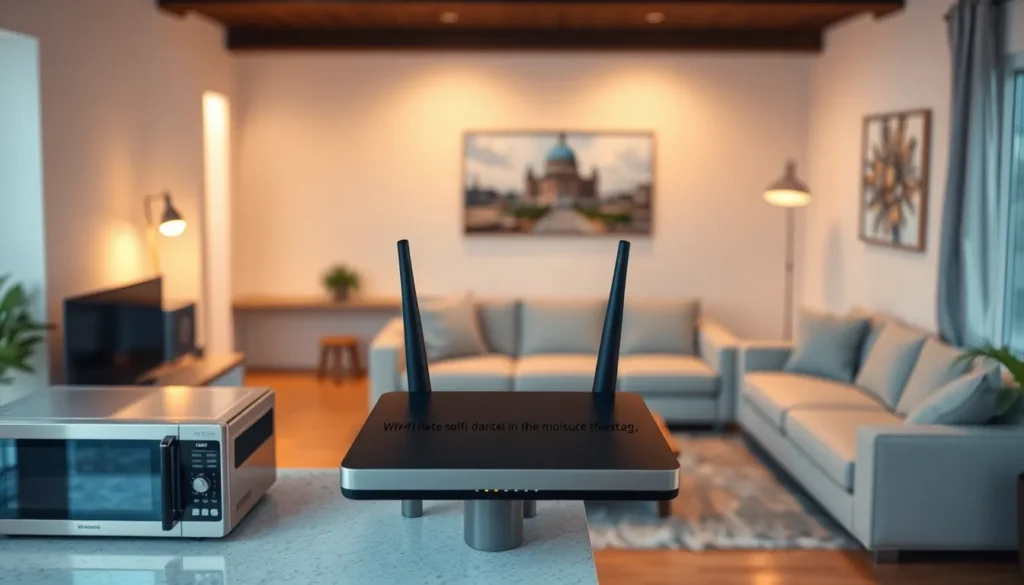

In a world where streaming cat videos is a top priority, nothing’s more frustrating than Wi-Fi interference. Picture this: you’re on the edge of your seat during the season finale, and suddenly your connection drops. It’s enough to make anyone consider a life of solitude in the woods—far away from routers and dead zones. But before you pack your bags, there are solutions to reclaim your Wi-Fi glory.
Whether it’s pesky neighbors stealing your signal or that ancient microwave sabotaging your binge-watching, tackling Wi-Fi interference doesn’t have to be rocket science. With a few clever tweaks and a sprinkle of tech magic, you can boost your signal and surf the web like a pro. Get ready to transform your home into a Wi-Fi fortress, where buffering is a thing of the past and seamless streaming reigns supreme.
Understanding Wifi Interference
Wifi interference emerges from various sources, disrupting connectivity and reducing signal strength. Common culprits include neighboring networks, electronic devices, and physical barriers. Neighbors often use the same channel, leading to overlapping signals and reduced performance.
Devices such as microwaves can create interference, particularly when operating. Their frequencies can overlap with those used by Wi-Fi, causing momentary disruptions. Thick walls, floors, and furniture also block signals, weakening the overall range.
Poor placement of the router significantly hinders performance. Centralizing the router in a home maximizes coverage, ensuring minimal obstructions. Elevating the router helps, as placing it on a higher surface increases visibility and signal strength.
Also, utilizing dual-band routers offers better options. The 2.4 GHz band covers longer distances, while the 5 GHz band is less congested and provides faster speeds. Choosing the right band based on specific needs improves overall performance.
Identifying these sources of interference often requires systematic testing. Network performance can be evaluated using apps designed for this purpose. Recognizing peak usage times can also help avoid slowdowns during busy hours.
Understanding the environment contributes significantly to improving Wi-Fi experience. Assessing layout and device proximity allows for tailored solutions. Implementing these strategies can significantly reduce interference, leading to a more stable, reliable connection.
Common Causes of Wifi Interference
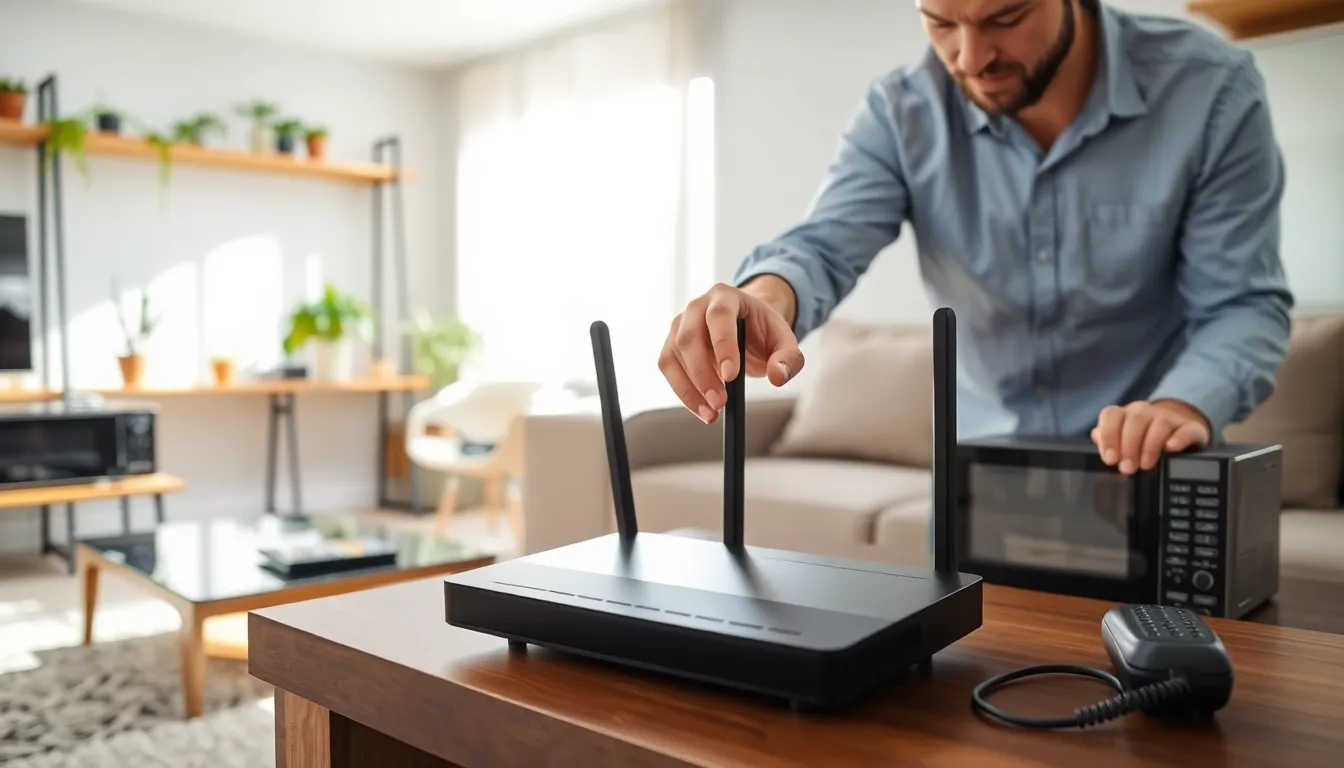
Several factors contribute to Wi-Fi interference. Understanding these causes can help in mitigating issues and enhancing wireless connectivity.
Physical Obstructions
Physical barriers can significantly weaken Wi-Fi signals. Walls, floors, and large furniture all absorb and reflect signals, leading to reduced coverage. Dense materials like concrete and metal are particularly problematic. Router placement matters. Central and elevated locations often provide the best coverage. Moving the router away from obstructions minimizes interference. In cases of multiple floors, using a Wi-Fi extender may improve signal strength. Evaluating the layout of the home helps identify optimal router placements for stronger connections.
Electronic Devices
Electronic devices frequently generate interference with Wi-Fi signals. Microwaves, cordless phones, and Bluetooth devices can disrupt connectivity. Operating on the same frequency band as the Wi-Fi network, these devices cause interruptions. Ensuring the Wi-Fi router uses the 5 GHz band can sometimes reduce interference since many household devices operate on the 2.4 GHz band. Disconnecting or relocating electronic devices from the router also helps improve performance. Assessing the types of devices in the environment supports effective troubleshooting for better connectivity.
Wifi Interference Solutions
Various strategies exist to enhance Wi-Fi performance and reduce interference. More precise adjustments can lead to smoother connectivity.
Optimizing Router Placement
Optimal router placement plays a crucial role in signal strength. Centralizing the router within the home maximizes coverage, minimizing dead zones. Elevating the router also improves performance, as signals travel better above large obstacles. Avoid placing routers near walls or electronic devices that emit interference, such as microwaves and cordless phones. Testing various locations can help determine the spot that yields the best signal quality.
Changing Wifi Channels
Changing Wi-Fi channels offers a straightforward way to avoid interference. Network congestion often occurs due to multiple devices using the same channel. Routers typically operate on 2.4 GHz and 5 GHz bands, with overlapping channels causing disruptions. Scanning for less crowded channels helps identify the best option for optimal performance. Many routers provide a user-friendly interface to change channels easily. Experimenting with different channels aids in finding a clearer signal.
Using Dual-Band Routers
Using dual-band routers significantly enhances flexibility for users. These routers offer both 2.4 GHz and 5 GHz bands, allowing users to connect devices based on specific needs. The 2.4 GHz band provides broader coverage, while the 5 GHz band delivers faster speeds and less congestion. Assigning bandwidth according to device requirements ensures better performance overall. Many modern routers come equipped with features that automatically select the best band for each device, simplifying the user experience.
Advanced Solutions
Advanced solutions provide effective methods to combat Wi-Fi interference, ensuring stronger and more reliable connections.
Signal Boosters and Extenders
Signal boosters and extenders improve Wi-Fi coverage in challenging areas of a home or office. These devices amplify the existing signal, increasing its range and strength. Users often place extenders strategically between the router and the dead zones. Installation is typically straightforward, allowing for quick enhancements in connectivity. Many signal boosters connect directly to an electrical outlet, creating an extended network with minimal setup time. Data shows that utilizing extenders can lead to 30%-50% increase in signal strength and coverage, making them a popular choice for those struggling with weak Wi-Fi signals.
Mesh Network Systems
Mesh network systems consist of multiple interconnected nodes that work together to provide uniform Wi-Fi coverage. Each node communicates with the others, creating a seamless network throughout large spaces or multi-floor homes. Users often experience reduced dead zones and improved overall performance with mesh systems. They can easily adjust settings via user-friendly apps, simplifying management of the network. Deployment of such systems has shown to significantly enhance performance, with speed improvements reported around 20%-40% in many cases. This solution effectively addresses issues arising from interference, delivering a more stable and reliable connection.
Addressing Wi-Fi interference is essential for a seamless online experience. By implementing strategies like optimal router placement and utilizing dual-band technology, users can significantly enhance their connectivity. Exploring advanced solutions such as signal boosters and mesh networks further empowers individuals to tackle coverage challenges effectively.
With a better understanding of the factors affecting Wi-Fi performance, anyone can create a more reliable and efficient network at home. Adopting these solutions not only minimizes disruptions but also ensures that important moments like streaming or video calls remain uninterrupted. A stable connection is within reach, and taking proactive steps can lead to a noticeable improvement in overall internet experience.